
Climate change, biodiversity loss, and efforts to address them have major impacts on the economy. Yet Finland’s Ministry of Finance lacks adequate tools for incorporating these impacts into economic policy planning. Now a new climate-economic model FinReform is being developed to help close this gap.
A few years ago, Denmark was engaged in a heated debate over a tax on agricultural emissions. Agriculture accounts for a quarter of Denmark’s greenhouse gas emissions, making it the country’s second-largest emitting sector after energy. Emissions had declined in other sectors, but not in agriculture.
The dispute was not an easy one to resolve. Agricultural organizations opposed the tax because they feared losing competitiveness to German farmers, while environmental organizations argued that the proposed tax would not reduce emissions enough.
Denmark, however, already had a tool designed for exactly this kind of analysis. Since 2017, researchers had been developing GreenREFORM, a climate-economic model that can be used to assess how different policy measures affect the economy as a whole. It is a large-scale economic model that combines extensive datasets, incorporating the entire Danish economy, along with extensive data on areas including agriculture and land use, energy, transport, waste, and emissions reductions.
Put simply, GreenREFORM is a huge computer model into which policymakers can enter different policy measures and ask what their effects would be across society. Using it is somewhat like flying a simulator: different measures can be tested to see whether they work.
In the debate over agriculture, the proposed emissions tax was entered into the GreenREFORM model, along with different forms of support, including subsidies for afforestation, biochar use, and emissions reductions. The model then produced scenarios showing how these measures could affect agricultural profitability, livestock numbers, land use, land prices, employment, tax revenues, and ultimately Denmark’s gross domestic product.
These scenarios helped provide a common basis for negotiations between the government, agricultural organizations, and environmental organizations. The resulting agreement enabled reaching a historical political decision in 2024: Denmark, as the first country in the world, decided to introduce a tax aimed at reducing agricultural emissions. The tax will take effect in 2030.
Finland is building on Denmark’s experience
Denmark is one of the world’s leading countries in economic modeling that incorporates climate impacts. Finland has also carried out this type of modeling, but not yet on the same scale or as systematically.
In 2024–2025, Finland participated in an EU project in which the Danish research institute DREAM trained five countries to use a streamlined version of GreenREFORM.
Building on this work, Finland has now begun developing its own FinReform model. The project is coordinated by the Natural Resources Institute Finland (Luke) and involves the Finnish Environment Institute (Syke), VTT Technical Research Centre of Finland, and six ministries. The project is funded by the TAH Foundation. The project runs until the end of 2027.
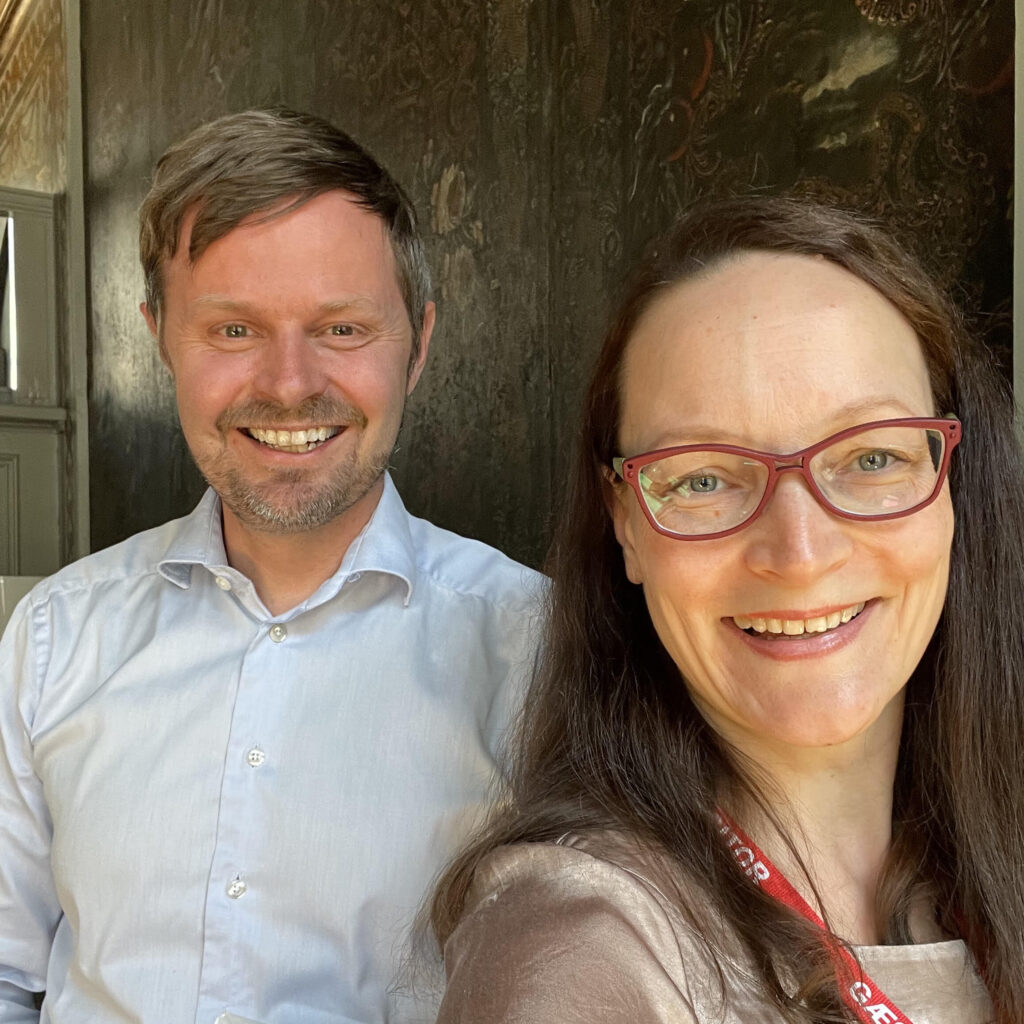
Kaisa Kosonen, Advocacy Specilialist at the TAH Foundation, says she is excited that the foundation can contribute to the model’s development.
“The enthusiasm among researchers and public officials is contagious! We need a better understanding, both in Finland and elsewhere, of what economic models can do and how they need to be improved to incorporate climate and nature. We hope this will encourage Finland to aim higher with such tools, to be among the frontrunners in this field.”
One of the objectives of TAH Foundation’s policy work is to strengthen the knowledge base for decision-making so that the economy-wide impacts of climate action can be assessed more effectively. According to Kosonen, decision-makers should be better able to assess how choices made today will affect society ten or twenty years from now, and how those choices may enable or lock in particular development pathways.
At the same time, the costs of inaction should become better reflected in economic policymaking. The direct and indirect costs of climate- and nature-related risks can otherwise receive too little attention.
“Things can seem really cheap until suddenly they become extremely expensive.”
Climate decisions are made without the full picture
Mikko Spolander, Director General of the Economics Department at Finland’s Ministry of Finance, says the ministry already has strong capabilities for carrying out partial analyses, meaning more limited assessments of individual impacts.
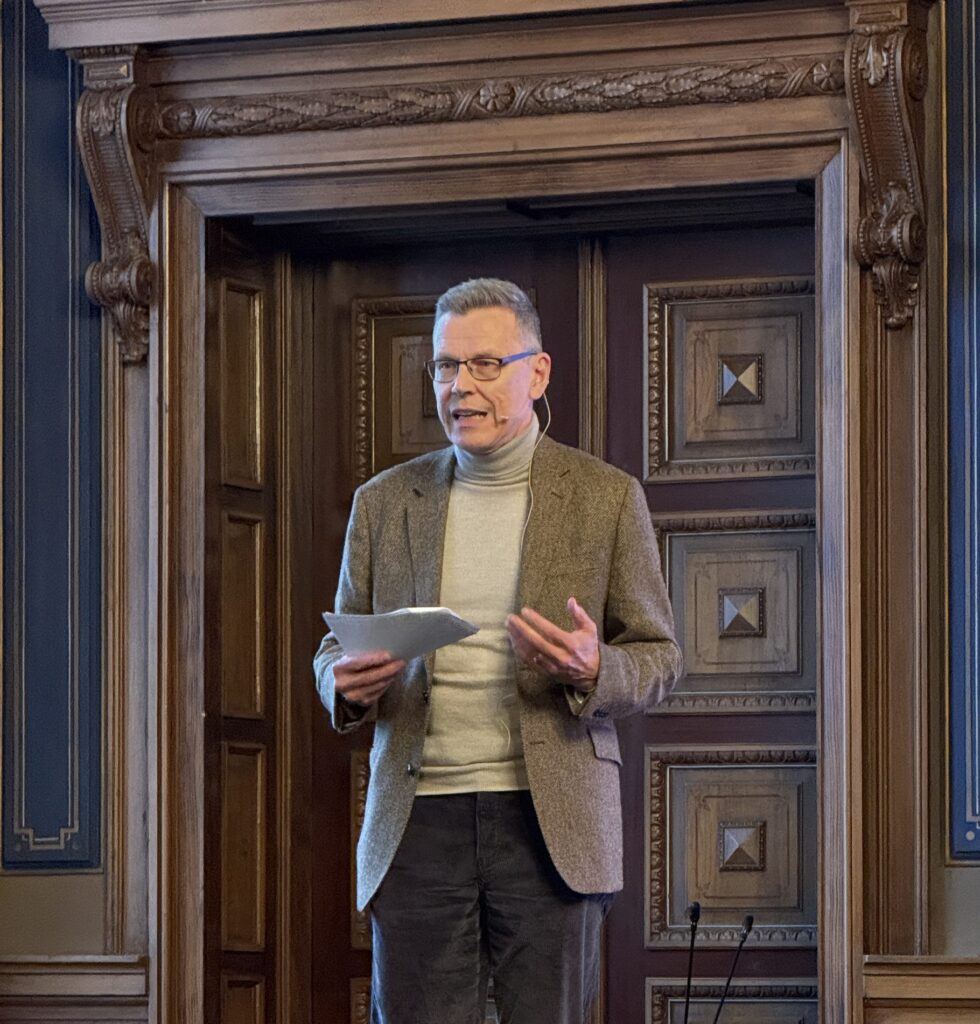
“For example, we can assess the effects of environmental taxation on whatever is being taxed very well.”
Such analyses, however, do not capture knock-on effects. A wind farm, for example, reduces emissions from energy production, but the analysis may overlook the fact that the investment also changes land use. That could increase emissions and costs elsewhere, for instance through deforestation or the construction of new roads.
As a result, climate and energy policy decisions have to be made without an adequate overall picture of their economic consequences.
The FinReform model will provide a more comprehensive view. It covers the economy as a whole, including businesses, households, the public sector, imports, and exports. It also incorporates emissions-reduction technologies and emissions accounting. This means it can be used, for example, to calculate the economy-wide effects of forest protection or the electrification of industry.
Jussi Lintunen, Associate Professor at the Natural Resources Institute Finland, describes the model as ambitious and says it can also identify knock-on effects.
However, Lintunen cautions against overly optimistic expectations about how quickly the model will be able to provide answers. It is unlikely to produce information on any given topic on demand. In Denmark, around 30 people work full time on the more extensive model, allowing the effects of individual policy measures to be analyzed quickly and flexibly. Reaching that level in Finland would require expanding the model with additional sub-models and securing permanent funding.
Building a better basis for decisions
During the previous government term, Finland’s Ministry of Finance prepared its first climate and nature strategy, to guide the ministry’s own work. This year, the VIHKA working group led by Mikko Spolander, was established to set out recommendations for improving the assessment of economy-wide impacts of climate change, the green transition, and biodiversity loss. Continuing the development of FinReform is one of the group’s recommendations.
The goal of the working group’s proposals is to give political decision-makers a more comprehensive picture of the impacts of their decisions.
“Some decisions are currently being made without full awareness of their various effects, particularly the cumulative and knock-on effects, because the knowledge base is incomplete,” Spolander says.
He explains that more could be achieved even with existing resources by improving cooperation and integrating the monitoring of climate and nature impacts more systematically into government programs, ministries’ annual planning, and performance management for government agencies.
The report describes this option as the “local train”: making steady but relatively slow progress toward a better knowledge base, one project at a time.
If Finland genuinely wanted to pick up the pace, however, it would need to board the “express train.” This could mean securing permanent funding for modeling, appointing a ministry to lead the assessment work, and strengthening expertise within the ministries themselves.
In practice, this would require a political decision during the next government term.
Spolander also points out that while the cost of inaction can be high, preventing or reducing those costs should itself be recognized as a benefit. He would like economic models to produce more estimates of the potential benefits for the economy as a whole, since periods of transition also create opportunities for those capable of solving problems.
Catching up with the frontrunners
During the spring, the Ministry of Finance-led VIHKA working group drew extensively on international experience. Sara Hellemaa, a financial specialist at the Ministry of Finance, edited the report and examined, among other things, the work of the Coalition of Finance Ministers for Climate Action.
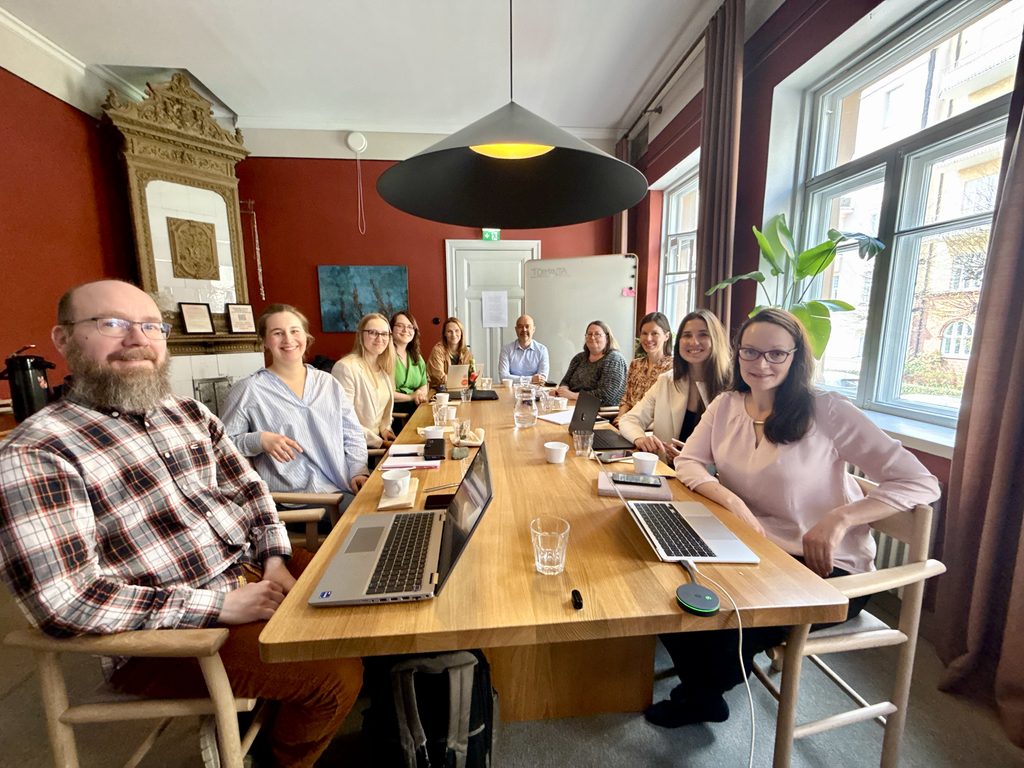
She, too, was impressed by Denmark, where this type of modeling has been developed for almost a decade and is led by a dedicated team at an independent research institute. The research organization works closely with users of the information, including government ministries.
Hellemaa is particularly interested in understanding how extreme weather events, such as heat waves in Central Europe, affect the Finnish economy over the medium and long term. She notes that the working group did not consider it realistic for Finland to become the world’s leading country in this type of modeling within the next few years, given that Finland is still catching up.
“But even catching up with the frontrunners would be a major leap forward in integrating climate and nature into economic policy,” Hellemaa says. “Open dialogue among key stakeholders is important because climate change and biodiversity loss are already transforming the economy and society.”
Hero photo: Nick Karvounis / Unsplash